
Silver is traditional, elegant and timeless and lends an unparalleled level of elegance to every room of the home. From the dining table to the jewelry box, silver is the perfect addition to any antique collection.
With that being said, the care necessary to keep silver lasting and looking its best without tarnishing is often misunderstood and deters some from enjoying its classic beauty. When you purchase sterling silver jewelry, silver plates or cutlery, it is absolutely necessary that you know how to care for antique silver and keep it from tarnishing. With a little understanding and industry-standard tips, you'll be able to easily care for your silver and appreciate it all year long.
Whether you are just beginning to build a silver collection or you are already a seasoned collector, this article will show you that maintaining the beauty and shine of your silver doesn't have to be difficult. With these care and cleaning silver tips, you will be able to enjoy your beautiful plates, silverware, vases and more for years to come.
The “T” Word
What can we say? Tarnish can happen to any silver piece. Whether you have a jewelry box, a silver plate, or even a silver coin, it’s highly recommended to clean this precious metal in order to keep it in pristine condition. It's the natural chemical reaction between the surface of the silver object and elements in its surroundings, a process known as corrosion. For silver in particular, moisture, acids and sulfur-containing compounds in the air cause tarnishing. It manifests as a black, grey, dark brown or even purplish-blue tone over the surface of the silver piece

Be aware that certain foods can cause tarnishing of your silverware. With proper care, you can keep your most precious silver service looking beautiful for years to come. Illustrated: pieces from Tiffany & Co.'s Florentine Flatware Service. Circa 1900
Humidity, air pollution, hairspray, perfume, lotions, bleach and even the acid from your fingers can all lead to tarnished silver. When talking about silver flatware and serving pieces, foods such as garlic, onion, salt, eggs, fruit juices and spinach contain enough sulfur to start the tarnishing process, but that doesn't mean you can't use this precious metal with these foods. Once a meal is complete, it's best to clean the silver pieces used as soon as possible. Surprisingly enough, it's been proven that silverware used regularly, even daily, will tarnish far less frequently (if at all!) compared to silver that is taken out only for holidays or special occasions.
So, what do you do once the dreaded tarnish takes hold of your antique silverware and other cherished sterling silver pieces? Let’s find out with these simple dos and don’ts.
Shop our antique flatware to add the perfect pieces to your dining room table.
Cleaning: How to Prevent and Remove Tarnish
Your first step is to clean off any dirt, dust or other debris from your silver item. In all aspects of silver care, gentle is best. Harsh chemicals and abrasives are far more dangerous than some tarnish, and their use is often the greatest mistake silver owners make. If you have just used your silver item for dinner, hand wash it immediately with warm water and pat dry with a soft cotton cloth. As a general rule of thumb, just remember: "Less is more."
Do:
- Perform all silver care atop a protected, secure surface.
- Use untreated cotton gloves to prevent the transference of acid from your fingers to your clean silver.
- Use soft lint-free cloths, or even artist’s sable or other natural-bristled brushes, to get into hard-to-reach spaces.
- Use very mild dish soap and distilled water to wash away debris.
- Dry immediately with soft polishing cloth or towel.
- Especially for silver tableware, clean as soon as possible after each use

When cleaning detailed silver works, such as this incredible George III-period Silver Epergne, a soft natural bristled artist's brush can do wonders to clear dirt and debris from the intricate metalwork.
Don’t:
- Don’t use lemon-scented/containing soap, and make sure soap doesn’t contain harsh chemicals and is phosphate free.
- Don’t use tap water. It contains chemicals that can damage silver.
- Don’t soak antique silver pieces (or any metals for that matter) in water. Moisture is not your friend in this case.
- Don’t allow pieces to air dry. This will cause spotting and corrosion, especially in small crevices where water can accumulate and you can’t access.
- Don’t use a dishwasher. Hot water from the tap and harsh dish soap or detergents can permanently damage silver. Also, contact with stainless steel utensils will cause silver to develop black spotting that does not come off.
When it comes to cleaning your sterling silver, the most important thing is to hand was and dry quickly. The longer you leave silver exposed to food or chemicals, the harder it will be to clean later. When it comes to caring for silver, you want to stay away from harsh products that can do more harm than good. If you have any questions, you can always contact an antique shop for professional recommendations.
Silver Polishing
Once you’ve cleaned your silver, the next step is to polish it. This is where you actually remove the tarnish layer to expose the gleaming silver we all know and love. Again, don’t be tempted to rush on this part or use shortcuts that can negatively impact your precious silver.

When wood, hardstones or other natural or porous materials are used in a work of silver, make sure to avoid applying silver polish to those areas, such as the wooden handle of this Paul de Lamerie Britannia Silver Coffee Pot.
Do:
- Protect your hands with fitted nitrile gloves.
- Use a white or methylated spirit. These products can easily remove mild tarnish.
- Use mild silver cleaning products for hard-to-remove tarnish. These typically come in the form of a polishing cloth, cream, paste or foam that is gentle enough to both remove the tarnish without damaging your piece. These products can be found in your typical grocery, department store or online.
- Use soft cloths, cotton balls or swabs to apply your gently polishing agents. When these turn black, grab a new one.
- Remove any residues from your polishing product with a soft cloth, cotton ball or swab dipped in distilled water.
Don’t:
- Don’t use silver dips or harsh abrasives. Yes, you’ll get the tarnish off faster, but it will leave your silver scratched, looking lifeless, and you run the chance of damaging your silver.
- Don't apply silver polishes to non-silver materials. The parts of a piece that may incorporate wood, hardstones or other natural / porous materials could be damaged by these products.
- Don’t use “home remedies”. Toothpaste, lemon juice, ammonia, baking or washing soda and colas should never be used.
- Don’t use anything marked as a “metal cleaner” or “metal polish”. Different metals require different care. For silver, these products are far too harsh.
When polishing silver, take your time to remove tarnish little by little with the proper cleaning products. The last thing you want to do is use a harsh chemical that not only takes off the tarnish but can ruin the finish of the silver. It is important to use
Storing Your Silver
If storing your silver is necessary, make sure pieces are properly wrapped to keep them free of dust and dirt. The use of specially treated silver cloth bags and liners is highly recommended to give your pieces protection from tarnishing elements; it also provides soft padding to prevent accidental scratches or damage. In addition, there are several types of anti-tarnish strips and silica gels to keep tarnish and dampness at bay while your silver is not in use.
Do:
- Store items in a dry, well-ventilated place where the temperature is regulated and humidity is low. The smallest amount of moisture can tarnish your silver.
- Keep silver wrapped in a treated silver cloth bag or liners that deter tarnish and corrosion. You can even use acid-free tissue or paper and a plastic zipper bag.
- Use silica gel to help absorb any moisture from the air.
- Use anti-tarnish strips that remove tarnish-inhibiting agents from the surrounding air.
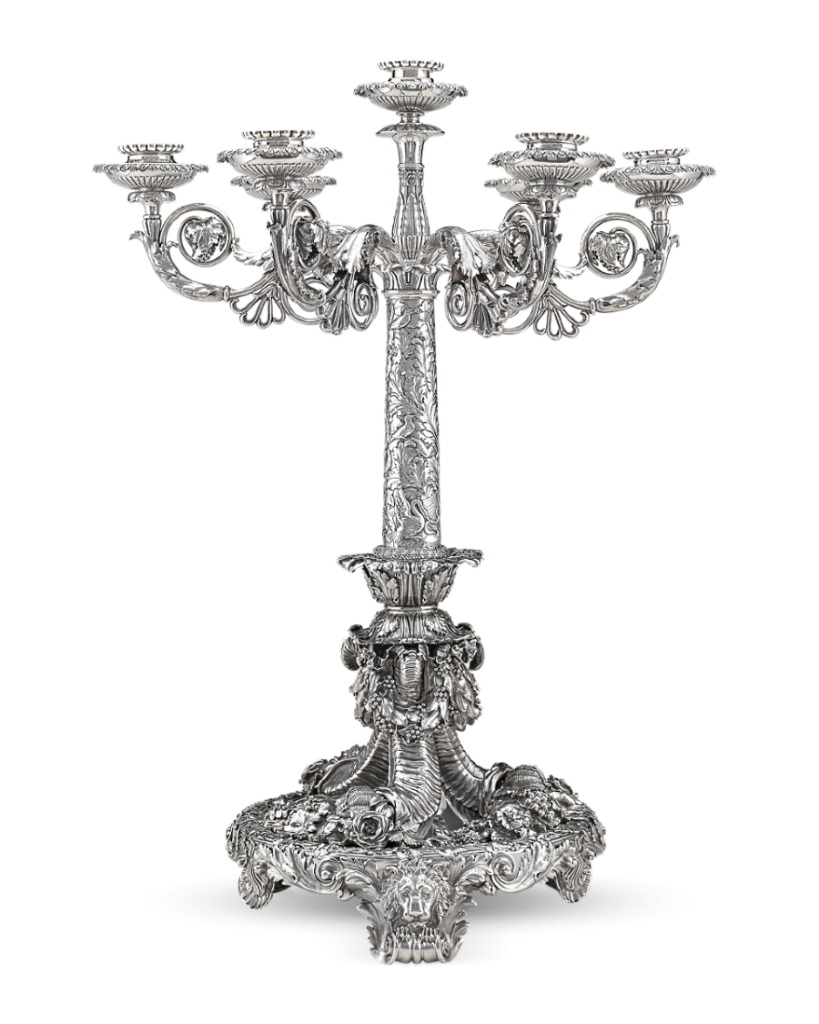
Remember, if you have any uncertainty about how to care for your silver, always consult with a conservator or silver specialist beforehand. Illustrated: Silver Centerpiece by Paul Storr, hallmarked London, 1815
Don’t:
- Don’t store silver with newspapers, rubber bands or felt. These things typically have chemicals in them that react with silver, causing irreversible black spotting.
- Don’t store silver near certain painted surfaces (latex-based) and treated fabrics that promote tarnishing.
Once you establish a routine for your silver care, the maintenance process can be done with ease. And if you ever have any questions, it’s always best to consult a conservator or silver expert before proceeding with any care treatments you’re uncertain about.
Regardless of the type of antique you are trying to clean or preserve, it is always recommended that you consult with a professional before applying any form of cleaner or chemical. By establishing a regular care and cleaning routine for your silver, you will be able to preserve and extend the life of your collection.
Now break out that sterling silver service, or visit our gallery to purchase some today, and start relishing in the splendor only fine silver can bring. You'll be pleased you did now, and for years to come.
Want to add to your antique silver collection? Browse our website or visit our showroom in person to find the most beautiful 17th through 19th-century antique silver for your collection.


