We cannot Contain Ourselves! New Shipment Arrives at Rau

July 19th, 2010 | posted by Rachel Fousch

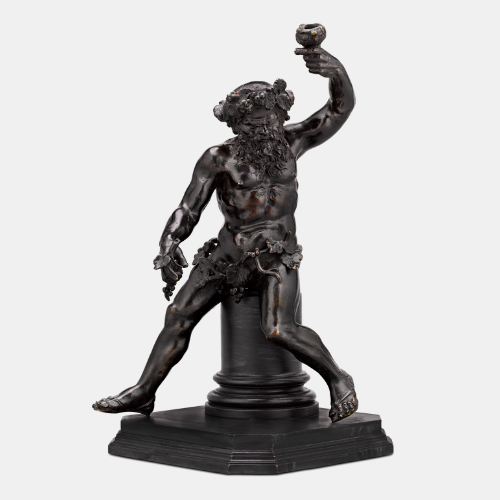
Several times a year, Rau employees anxiously await the arrival of another large container. Shipped from London, the containers travel by steam ship (then by truck or rail) and take an average of two weeks to arrive at our doors in the French Quarter. On “Container Day” all Rau employees join the unpacking team as new treasures are carefully unwrapped. From furniture to figurines, each shipment has an array of items, each with its own unique story. The container that arrived today (July 19) included several bronze sculptures (including a Renoir buste), a game table containing a plethora of playing pieces, several arm chairs, and numerous items by Galle, Tiffany Studios, and Meissen. To see all of our NEW items, check out the Recent Acquisitions portion of our website in the coming days!

1910: When the Water Rose…

July 16th, 2010 | posted by Ludovic Rousset

100 years ago, France saw the worst flood in the history since the 17th century. Due to the surplus of rain, snow and frost, the Seine River overflowed and rose from 12 to 28 feet in Paris and flooded 12 of the 20 districts which caused a lot of damage. It took 35 days for the river to retreat to its normal level.

Further West in Rouen, the Seine River rose up to 32 feet and flooded most of the valley. Rouen, the city of Joan of Arc’s judgment and Monet’s Cathedral of Notre-Dame, is the third largest port in France and the capital of Normandy.

The one hundred steeples, bridges and arches, the Seine and its quays, its smoke, its ships and clouds make up a most intricate landscape that attracted Impressionist painters such as Corot, Boudin, Monet, Pissarro or Gauguin during the second half of the 19th century. They found there a unique feel of changing atmosphere and foggy air.

The term “School of Rouen” was first used in 1902 by Arsène Alexandre to designate the impressionism branch of Rouen. The School of Rouen is defined as a set of young painters born between 1849 and 1890 in Rouen, who did not only understood the method of Impressionism, but helped to develop.

For his painting Inundations, Narcisse Guilbert (1878-1942) used his remarkable technique to illustrate this historical catastrophe but also to challenge himself to paint this new landscape which he used to be so familiar with.

He chose to depict the river from up on a hill. This upper view allowed him to show a larger portion of the river and its surroundings. A perfect and comprehensive perspective is organized through the interaction between the sky and the water.

This painting is a great example of Guilbert’s work. We can clearly observe his influences and it shows his incredible ability to transform a devastated land into a harmonious composition. Guilbert was able through his work to express his attachment to his homeland but also to capture the light of the perpetually changing climate of Rouen….

He Makes A Beautiful Point

July 2nd, 2010 | posted by John Finnegan

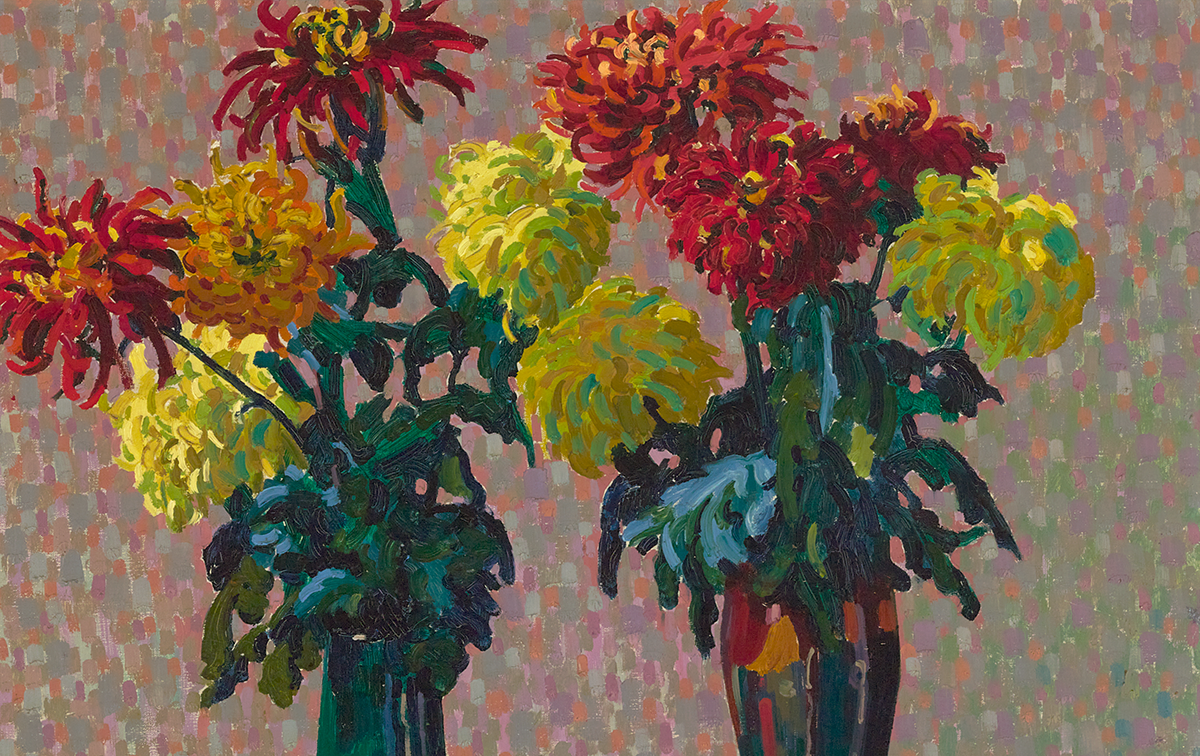
Theo van Rysselberghe was a  Belgian painter, designer, and sculptor. In 1883, he became a founding member of the avant-garde group called Les Vingt. Les Vingt encouraged an interest in innovative art. Later, van Rysselberghe met Seurat in Paris, and later became the leading Belgian exponent of Neo-Impressionism and eventually Pointillism.

The term Neo-Impressionism is applied to an avant-garde, European art movement that flourished from 1886 to 1906. The term Neo-Impressionism was coined by the art critic Félix Fénéon in a review, ‘Les Impressionistes’ (in La Vogue; Paris, 1886), of the eighth and last Impressionist exhibition. Camille Pissarro had convinced his Impressionist colleagues to allow paintings by himself, his son Lucien Pissaro, Paul Signac and Georges Seurat to be shown together in a single room, asserting a shared vision and inviting comparison. Seurat, however exerted the greatest influence on van Rysselberghe in his earlier period and this influence only began to wane after he experienced the Fauvist color theories.

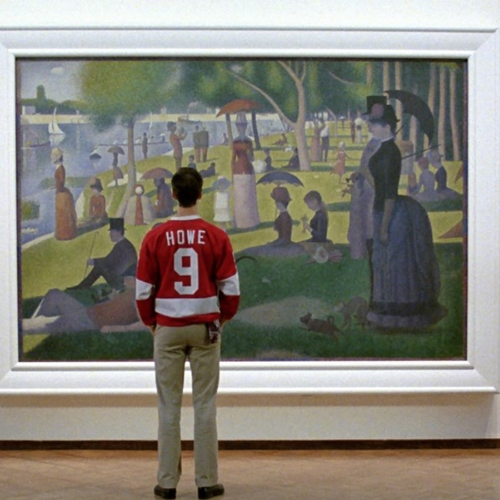
Seurat’s pointillist technique employed a point, or small dot, of color to create the maximum color intensity in a Neo-Impressionist canvas. While Neo-impressionism suggests both the style created by Seurat and the ensuing movement that flourished between 1886 and 1906, Pointillism denotes only the technique. Seurat favored the term ‘chromo-luminarism’, which conveys his dual interest in intensifying the effect of color and light. Seurat’s chief disciple, Paul Signac, in his book D’Eugène Delacroix au Néo-Impressionnisme, offered an alternative term to Pointillism or chromo-luminarism.

Discontent with this, he transitioned to what is now known as Divisionism. This term, invented by Paul Signac, is used to describe the Neo-Impressionist separation of color into dots or patches applied directly to the canvas. Following the rules of color-contrasts laid out by Ogden Rood and Michel-Eugène Chevreul, this method was intended to produce maximum brilliance scientifically and to avoid the muddiness caused by physically mixing colors before applying them to the canvas.

Close-up, a divisionist canvas is a mass of contrasting dots: at a distance, the colors enhance each other to produce an effect of shimmering luminosity. Divisionism refers to the general principle of the separation of color, unlike the term Pointillism, which refers specifically to the use of dots. Employed in France by members of the Neo-Impressionist group, Divisionism was also popular in Belgium among Les XX and in the Netherlands.

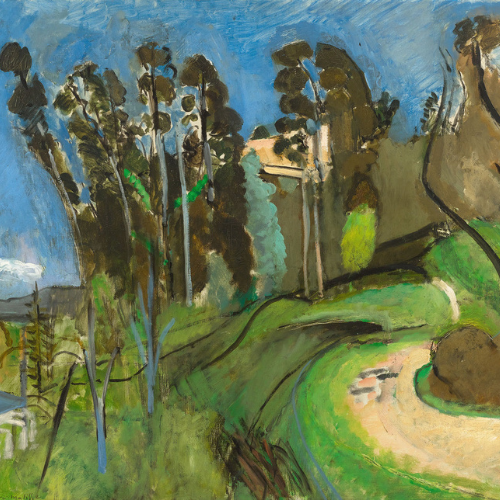
After studying the full spectrum of the Neo-Impressionistic movements, van Rysselberghe, comfortably settled in to a “more broad brushstroke” emulating, in fact, a brush stroke seen by the Impressionist master van Gogh himself. Our canvas, entitled ‘La Baie de Sainte Brelade, Jersey’, exhibits and clearly demonstrates van Rysselberghe’s desire to follow van Gogh’s palette by use of a consistent color, impasto and the wider brushstroke.

The artist did not stop there either. Instead, he went on to employ similar theories executed by none other than Claude Monet. The contrasting palette and use of primary colors with divergent grays and pinks creates an explosion of color and light. Interestingly, it was his desire to return back to the ABC’s of pure impressionism when he completed this canvas. ‘La Baie de Sainte Brelade’ is a superb example of a Neo-Impresssionist’s intention to return to the fundamentals but more importantly, however, is his “comfort.”

Luckily, some things never change…

June 23rd, 2010 | posted by James Gillis

Even though this was long before I began working at Rau, it’s always a pleasure hearing stories like these, and knowing that forty five years can go by and the customers have stayed with us. It’s a true testament to the store and the high quality items that Rau is known for. I received this email from a longtime customer yesterday and wanted to share it. Thanks for your letter Jeffrey and all the years of your loyalty!

“Rau is and has been one of my favorite haunts and places of purchase. My first purchase was in 1964 when I was in New Orleans with my parents for a vacation. We went to the race track and I won the daily double. My Father was horrified and mentioned to my Mother that he thought they had made a dreadful mistake taking me to the races. But, I showed them; with my winnings I took them out on the town for a wonderful evening, then with the rest of the money went to Rau and purchased a beautiful carnelian seal ring, which I still wear to this day. Last time I was in New Orleans, in May of ’08, I once again, returned to Rau. It was just as wonderful as I have remembered it. It is so comforting to realize there are still retailers in this world that are willing to keep up their great reputation and fine offering and service. Hope time and opportunity will allow me to return to New Orleans soon and will look forward to meeting and seeing you in person.”

Many thanks,

Jeffrey P. Angwin-

Bothell, Washington

Little Pistols, Big Bang

June 18th, 2010 | posted by James Gillis

As a former US Marine, I’m always excited when we get in antique weaponry at the gallery. Not only is the craftsmanship both internally and externally impressive, it shows how  quickly and stealthily “disagreements” could be resolved in those days. My how I yearn for those days! This striking set of Pocket Percussion Pistols that just came in is particularly impressive. Don’t let the small size fool you, the business end of these weapons delivered a big punch. The muzzles are rifled, giving an accurate and lethal edge to these palm size genteel weapons. These weapons are as innovative as they are lethal.

Each pistol bears the Belgian proof mark and the number “328.”

They call to mind the era of gentlemanly disputes. The handsome ivory grips and precise engraving distinguish this pair of Belgian percussion pocket pistols from the city of Liège. Each pistol is crafted of beautifully engraved Damascus steel, including the pommel cap, and features a side hammer design with a pop-out trigger. When the hammer is pulled back, the trigger “pops” from the secreted underside of the pistol and retracts back into the gun upon firing, making it easy to carry and draw at a moments notice. The pistols are positioned in their original, velvet-lined quarter-sawn oak fitted case, which houses a powder flask, bullet mold and caps.

When I hold it in my hand, you can hardly even see I’m holding a gun. The “success” of this set is in its’ slyness! It’s a remarkable collection piece either as the cornerstone or spectacular addition to an already prominent firearms collection.

Pistol: 5 1/8” length
Caliber: 9mm
Barrel: 2” length

Next »